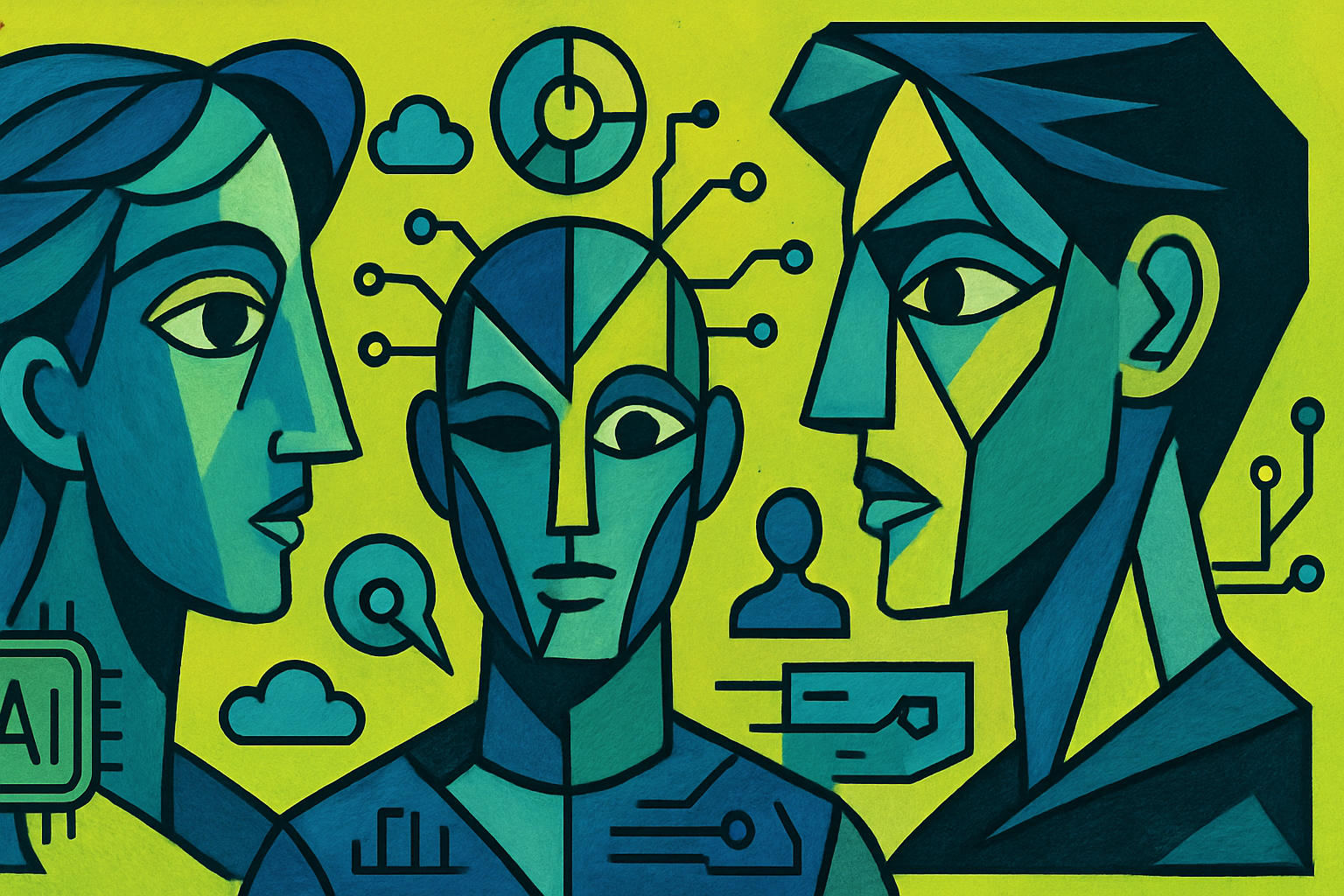
Imagine chatting with a lifelike AI avatar that not only remembers your preferences but responds to your emotions in real time. This isn’t science fiction; digital humans are already redefining how we work, learn, shop, and travel.
In 2025, industries across the globe are harnessing AI-powered digital humans for seamless customer service, smarter workflows, and more personalised experiences than ever before. Get ready to see how these breakthrough technologies are putting the “human” back into digital transformation, one real-time conversation at a time.
If you’re curious about how AI is shaping the future, this blog will walk you through what digital humans are, their real-world applications across diverse sectors, and specific AI tools leading this change in 2025.
What Are Digital Humans?
Digital humans are AI-driven virtual avatars that simulate human appearance, expressions, voice, and emotions. Unlike traditional chatbots, these advanced AI entities leverage natural language processing, machine learning, and 3D modeling to engage users in natural, relatable conversations.
They understand emotional cues, respond empathetically, and provide personalized experiences anytime, making digital interactions more human-like.
How Digital Humans Are Revolutionizing Workplaces
Digital humans are acting as virtual colleagues and assistants, streamlining processes such as onboarding, training, administrative support, and sales.
Here’s how they impact work:
• 24/7 Availability: They handle repetitive and routine tasks around the clock, breaking language barriers and enabling global collaboration.
• Enhanced Virtual Collaboration: Digital twins powered by AI join meetings and provide human-like interactions in remote and hybrid settings.
• Cost and Efficiency Gains: Automating routine work frees employees to focus on creative and strategic projects, improving productivity and cutting costs.
Transforming Customer Experience with Digital Humans
Across healthcare, retail, travel, education, and more, digital humans are creating empathetic and personalized customer engagements:
• Personalized Support: They recognize customer emotions and customize responses to boost loyalty.
• Consistent Service: Unlike humans, digital avatars work tirelessly, providing accurate and prompt support 24/7.
• Interactive Engagement: From guiding shopping choices to offering healthcare advice, digital humans create immersive, responsive experiences.
Real-Time Digital Human Applications Across Industries
| Industry | Real-Time AI Application Examples & Leading Tools |
| Healthcare | Keragon automates patient intake securely; IBM Watson Health analyzes medical data for personalized treatment and accurate diagnostics. |
| Education | Magic School AI personalizes lesson plans and tests; Carnegie Learning offers adaptive tutoring with real-time feedback for students. |
| Sales & Marketing | DaveAI provides virtual sales avatars for interactive product demos and recommendations; Artisan AI (Ava) automates lead generation via email and social media. |
| Retail | UneeQ delivers AI-driven sales training and digital assistants for personalized shopping; IBM Retail AI supports real-time customer queries and dynamic pricing. |
| Travel & Hospitality | WestJet Juliet manages travel itineraries using a virtual travel assistant; BagsID enables biometric baggage tracking at airports. |
| Finance | AI digital humans offer 24/7 customer support for banking inquiries and fraud alerts; Assist with risk assessment and real-time compliance monitoring. |
| Entertainment | Virtual influencers engage audiences on social media and live events; AI avatars serve as interactive event hosts and gaming characters responding with realistic emotions. |
| Manufacturing | Digital twins powered by AI enable predictive maintenance and real-time defect detection; Digital assistants guide assembly line workers through complex tasks. |
Ethics and Future Outlook
Digital humans represent a fusion of artificial intelligence, human psychology, and immersive technology. They are not just tools but pioneers for a future where AI can deeply understand and enrich human experiences, making work and service more accessible, empathetic, and efficient.
If you want to stay ahead in the AI world, exploring AI-powered digital human tools in your sector could transform how you connect with customers, employees, and learners—ushering in the next era of digital interaction.
As AI continues to advance, digital humans will become even more realistic and capable, potentially acting as personal digital twins for everyday digital interaction. However, with great innovation comes responsibility.
The ethical use of digital humans requires attention to privacy, bias, consent, and the impact on human jobs. Businesses and developers must prioritize transparency and data protection while harnessing this technology. Responsible design, transparency, and clear ethical guidelines are essential to ensure these advances benefit society fairly.
The future is no longer a distant vision; it is here, powered by digital humans that merge AI intelligence with human warmth. From diagnosing patients faster in healthcare to offering travellers a stress-free journey, these AI-powered avatars are redefining how we work, connect, and interact.
As industries embrace this evolution, the possibilities will only expand; digital humans could become as common as smartphones, seamlessly assisting us in everyday life while enhancing productivity, creativity, and connection.
The question is no longer if you will interact with a digital human, but when; and when that moment comes, it may be hard to tell where the technology ends and human empathy begins.
If you’re ready to stay ahead in a world driven by AI innovation, exploring digital human applications in your field could be the smartest move you make in 2025.