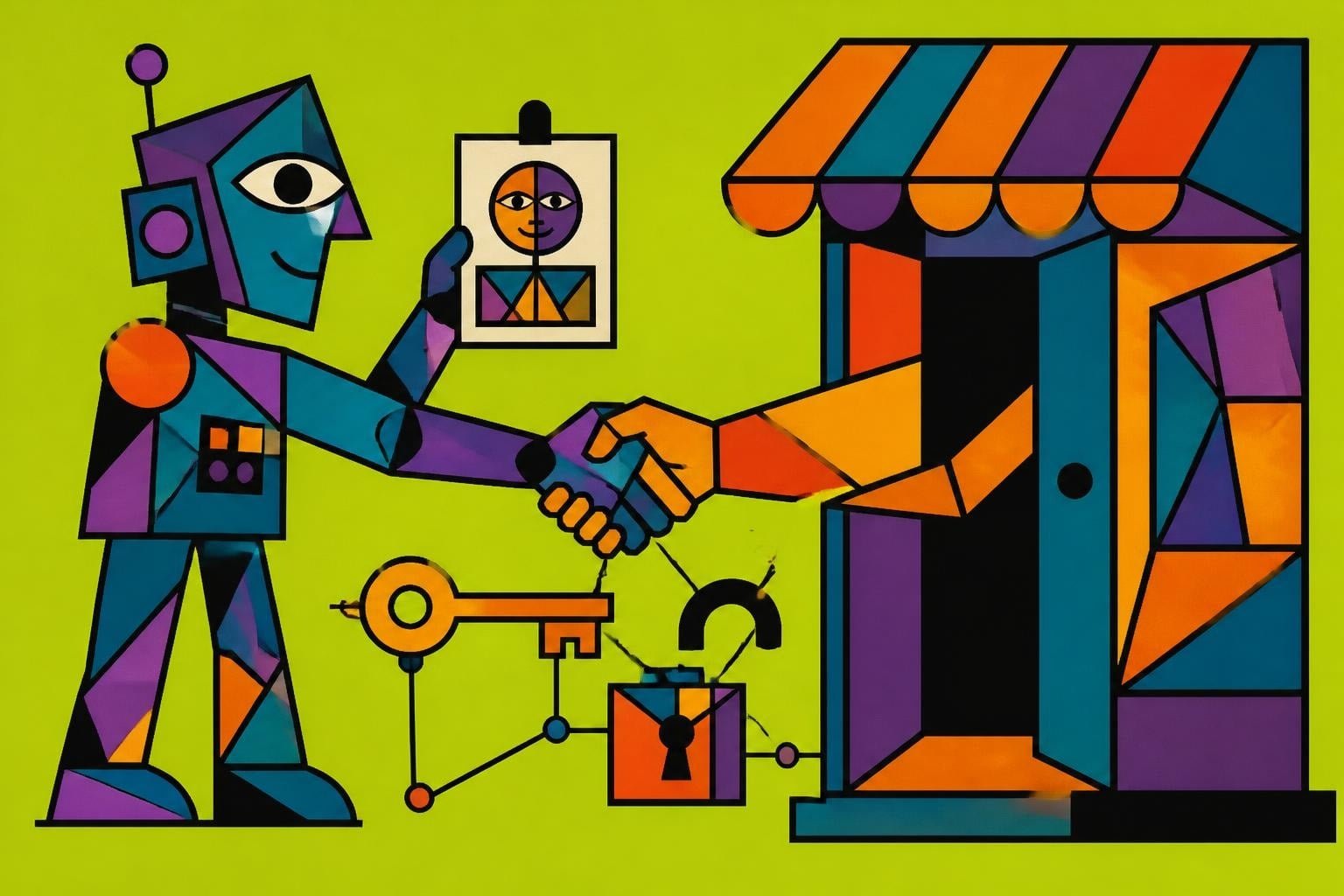
The short answer: The Personal Agent Protocol is an open standard, announced on 6 Oct 2026 by Sierra with Meta, for how personal AI agents identify themselves and sign in to businesses for a customer. You decide what your agent can access, and the business decides what agents are allowed to do.
Key facts
- What: an open standard that anyone can implement, built on OAuth (the technology behind “sign in with” buttons).
- Who: developed by Meta and Sierra with Genesys, Instinct, Rocket, Shopify, Stripe and Walmart.
- When: announced 6 Oct 2026. A v0.1 specification is due later in October 2026.
- Why: most AI agents today browse sites like a person would, so businesses cannot tell an agent from a human.
What happened
- Sierra announced the Personal Agent Protocol on 6 Oct 2026, in a post by co-founders Bret Taylor and Clay Bavor. It is being developed by Meta and Sierra with Genesys, Instinct, Rocket, Shopify, Stripe and Walmart, and is open for anyone to implement. (Sierra)
- An agent first discovers what a business offers through its website, then starts a session for its user, as a guest or signed in. Sessions are built on OAuth. (Sierra)
- The customer chooses read-only or write access for their agent. The business sets the rules for what agents can do, and can let them in through its website, its APIs, or its own company agent. (Sierra)
- Next steps listed by Sierra: publish the v0.1 specification later in October, run design workshops, and release a reference implementation for developers. Payments support is planned as a future extension, not part of the first version. (Sierra)
- CNBC reported the effort as Meta joining a group of companies to tame the “chaos” of doing business with AI bots. (CNBC)
- Context: Meta launched Muse, its personal AI agent, on 8 Sep 2026 in the US. (Axios) Amazon later blocked Muse from shopping on its site, which we covered here.
- It is not the only standard in this space. Visa’s Trusted Agent Protocol, announced in October 2025, lists Stripe and Shopify among its early partners. (Visa)
Our read (opinion)
This is the plumbing story of the year, and plumbing decides who gets paid. Whoever controls how agents log in has a lot of say over the checkout.
Rival agent standards already exist, which tells you nobody has won yet. Do not rebuild anything around one of them today.
Do this
If you run a website or online store, open your analytics this week and look for automated or unusual traffic. Then write one line deciding your policy: block agents, allow them, or allow read-only.
FAQ
What is the Personal Agent Protocol?
It is an open standard, announced on 6 Oct 2026 by Sierra with Meta, that defines how personal AI agents identify themselves to businesses, sign in for a customer, and what they are allowed to do once inside.
Which companies are behind the Personal Agent Protocol?
Meta and Sierra are developing it with Genesys, Instinct, Rocket, Shopify, Stripe and Walmart.
Can an AI agent buy things for me under this protocol?
Not in the first version. Sierra lists payments as a future extension. For now the protocol covers discovery, sign-in and read or write access.
How is this different from an AI agent just using a website?
Today most agents load pages and click through forms like a person, so businesses cannot tell them apart from humans. Under this protocol the agent identifies itself and works within limits the business sets.
When will the specification be published?
Sierra says the v0.1 specification will be published later in October 2026.